
The dollar's strength against other currencies overseas limited the rupee's gain.

Overseas, the US dollar hovered near a three-week low.
The rupee on Friday fell by 9 paise to 67.64 per dollar on fresh demand for the American currency.
Rupee is under pressure against the dollar say currency watchers.
However, dollar's rise against other currencies overseas capped the gains

The rupee closed almost flat at 65.76 against the US dollar on some demand for the American currency from banks.

The Sensex and Nifty spiralled lower for the fourth session on the trot on Wednesday as investors remained on edge ahead of US inflation data, which will give clues on the Federal Reserve's policy tightening trajectory. Unabated selling by foreign institutional investors and a jump in crude prices also weighed on sentiment, traders said. Despite a firm start, the 30-share BSE Sensex failed to carry forward the momentum and ended at 54,088.39, lower by 276.46 points or 0.51 per cent. During the day, it tumbled 845.55 points to 53,519.30.

The dollar index was down 0.01 per cent at 95.86 against a basket of six currencies in early trade

The Indian rupee is expected to trade between 80 and 84 against dollar in the first three months of 2023 with support from overseas inflows though worsening current account deficit (CAD) and reduced interest rate differential between the US and India pose challenges. According to a Business Standard Poll of 10 participants, most said the rupee could gain strength in January due to foreign inflows, and the Reserve Bank of India (RBI) is not expected to allow the currency to depreciate ahead of the Union Budget scheduled on February 1. The rupee depreciated 10.15 per cent in 2022, its worst performance since 2013 as the war in Europe and the interest rate increase by the US Federal Reserve prompted investors to flee emerging markets.

Equity indices faced a heavy drubbing on Thursday after an initial rally, with Sensex tanking 1,045.60 points amid a largely bearish trend overseas after the US Federal Reserve hiked rates by 75 basis points.

In August 2014, imports stood at $ 2.06 billion. Higher imports will have adverse bearing on India's current account deficit (CAD).
The rupee showed range-bound movement on Wednesday as investors preferred to stay cautious in the unsure market.

The rupee ended steady against the American currency at 66.19 per dollar at the Interbank Foreign Exchange here today in view of steady dollar in the overseas market.

On Wednesday, the rupee ended barely steady at 64.93.
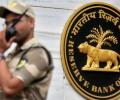
A day after the RBI raised the benchmark lending rate by 35 basis points, Kotak Mahindra Bank Managing Director Uday Kotak on Thursday said the central bank may go for one more rate hike to bring inflation below its upper tolerance level of 6 per cent. Yesterday, the RBI indicated that it wants inflation to be within the band first and then move towards the target of 4 per cent, Kotak said at the CII Global Economic Policy Summit 2022. "My sense is that there could be one more rate hike and that may be the time for thinking about a pivot, but we got to watch very closely the data, and maybe around 6.5 per cent as it looks today, subject to what happens to the world, subject to what happens to oil, subject to what happens to many other things," he said.

The rupee appreciated 7 paise to 79.74 against the US dollar in early trade on Thursday as a positive trend in domestic equities supported the local unit. However, a strong American currency overseas and forex outflows restricted the rupee's gain, dealers said. At the interbank foreign exchange, the rupee opened at 79.72 against the American dollar, then went lower to trade at 79.74 against the greenback in early deals, registering a gain of 7 paise over the last close.

Extending losses for the second straight session, the rupee slipped by 11 paise at 66.54 against the US dollar.
The Indian rupee had lost 10 paise to close at 64 on Thursday.

Sensex witnessed the biggest single day gain since May 2009 in absolute terms.
The US dollar index, which measures the greenback's strength against a trade-weighted basket of six major currencies, was up by 0.31 per cent at 97.52.

The collapse of Silvergate Bank, Silicon Valley Bank (SVB) and Signature Bank in the US might create temporary liquidity issues but will not have any significant impact on the Indian crypto market in the long run, officials from several exchanges told Business Standard. All three banks are considered crypto-friendly. SVB offered services such as cryptocurrency custody and lending.
Rupee weakened by 10 paise to end at 66.14 against the dollar due to month-end demand from importers and banks.

The rupee continued to slide against the pound sterling and finished at 102.64 as against 102.25 previously.

Kotak Mahindra Bank was the biggest loser from the Sensex pack, skidding 1.83 per cent, followed by Axis Bank, NTPC, Hindustan Unilever, ICICI Bank, Bharti Airtel, Reliance Industries, HCL Technologies, IndusInd Bank and Nestle. In contrast, Bajaj Finance, Bajaj Finserv, Tech Mahindra, Tata Consultancy Services, Titan, Infosys, HDFC Bank, HDFC and ITC were the gainers.

The rupee surged to its highest level in five weeks to end at 65.58 by gaining 38 paise against the US currency.

With former prime minister Imran Khan in jail, Sharif's Pakistan Muslim League-Nawaz (PML-N) is tipped to emerge as the single largest party in the elections.

The rupee depreciated 11 paise to a record low of 78.96 against the US dollar in opening trade on Wednesday, weighed down by persistent foreign capital outflows. At the interbank foreign exchange, the rupee opened on a weak note at 78.86 against the American dollar, then lost ground to quote at 78.96 -- its all-time low level, registering a fall of 11 paise from the last close. On Tuesday, the rupee plunged by 48 paise to close at record low of 78.85 against the US dollar.
Domestic equity markets opened with losses which capped the rupee gains.

The domestic currency had gained seven paise on Friday.

For the first time, the rupee declined to the low level of 80 against the US dollar in intra-day spot trading on Monday before ending the session 16 paise lower at 79.98 amid a surge in crude oil prices and unrelenting foreign fund outflows. At the interbank forex market, the local unit opened at 79.76 against the greenback but lost ground to touch the psychological low mark of 80 against the American currency. The local unit clawed back some lost ground and closed at 79.98, registering a fall of 16 paise over its previous close.

The rally in PSBs, analysts feel, was more a knee-jerk reaction to the development, and the actual benefits will start to accrue once the addition takes place in 2024. "The actual benefit for banks from the inclusion in JP Morgan's EM Index will accrue from June 2024 onwards. "Until then, the larger fundamentals of the market will dictate the moves. "Once the initial euphoria subsides, bond markets will look to global cues which may trigger fresh selling," said Siddharth Khemka, head of retail research, Motilal Oswal Financial Services.

Weakness in the greenback overseas against the backdrop of sluggish US macro data outcome helped the home currency move higher
The dollar index eased 0.05 per cent to 98.69.

The rupee recovered by 15 paise at 65.49 against the US dollar.

Forex dealers said besides robust month-end demand for the American currency from oil importers, dollar's strength against its rival currencies on expectations of rising interest rates amid lingering Sino-US trade tensions, weighed on the domestic currency.

Analysts say that the rupee trajectory, going ahead, will be a function of flows.

A weak dollar against major world currencies supported the domestic unit.

The US dollar turned expensive against a basket of global currencies which hit the rupee sentiment
The rupee had advanced 7 paise to end at 65.51 on Thursday.
In forward market today, premium for dollar declined on sustained receivings from exporters.
 © 2026 Rediff.com - Advertise with us - Disclaimer - Privacy Policy - Sitemap - Feedback - About us - Terms of use - Grievances